
#ANZMarist150: “Everything is part of God’s plan” - St Paul’s School Headmaster Keith Simento’s Marist journey from a chance encounter to a lifelong mission
Updated: Aug 4
Warm, welcoming and deeply grounded in his faith, Keith Simento exemplifies the Marist values of humility, service and presence. As the first Headmaster of Indian origin at St Paul’s College, Auckland, his personal journey mirrors, in many ways, that of the early Marist Brothers who left everything behind to begin a new life in Oceania more than 150 years ago.
When Keith came to Aotearoa New Zealand from India in 1996, he carried little more than US$1,500 and a determination to succeed. Unable to find work initially, he stacked milk cartons at a supermarket while completing a teaching course and adapting to life in an unfamiliar country. Two years later, he secured his first teaching position at Auckland Grammar School - a school he had once been told he would never work at.

Over the following decades, Keith built a distinguished career as a science teacher and educational leader, guided by the belief that he had “nothing to lose” and trusting that “perhaps this was all part of God’s plan” as he steadily progressed from the classroom into senior leadership.
In 2021 applied for the role of Headmaster of St Paul’s College and was appointed to the position, becoming the first Indian-born New Zealander to lead the school. Nearly five years later, he continues to strengthen the college’s proud Marist tradition, ensuring its predominantly Māori and Pasifika student community flourishes academically, spiritually and personally in the Marist way.
As Marist education in Aotearoa New Zealand celebrates 150 years, The Star Post spoke with Keith about his remarkable journey, the challenges he overcame, his vocation as a Marist educator, and his hopes for the future of Marist education.
How did your journey with St Paul’s College begin?
In 2021, this position opened up. Before I submitted my application, I met with the then Headmaster, Kieran Fouhy. He invited me to visit the school and showed me around the campus and gave me a real sense of what St Paul’s was about. After that visit, I decided to put my application in.
I was quite surprised when I was shortlisted for an interview. Coming from a state school and having never worked in a Catholic school in Aotearoa New Zealand, I knew that could have weighed against me.
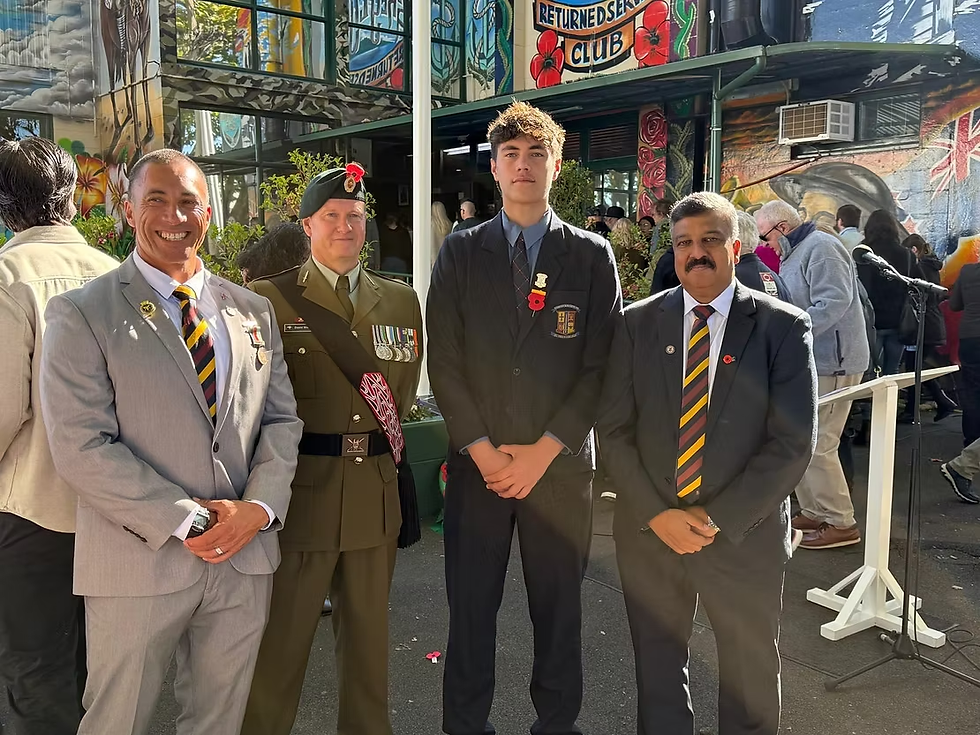
The interview included a presentation on my vision for the future of a school like St Paul’s.
Professionally, I also felt well-prepared. During my five years as Deputy Headmaster at Auckland Grammar School, I had responsibility for pastoral care, particularly for senior students. I oversaw student discipline, examinations and worked closely with Māori and Pasifika students, areas that I was deeply passionate about.
I was then invited back for a second interview, this time with the entire Board. There were around a dozen board members, each asking different questions following another presentation.
Throughout the process, I kept reminding myself to simply be genuine.
“This is who I am. If I am the right person for the role, that’s wonderful. If they are looking for someone else, that’s completely okay too.”
But I got the job!
The appointment was made in July 2021, with my official start date set for October, right in the middle of the COVID pandemic.
“This is who I am. If I am the right person for the role, that’s wonderful. If they are looking for someone else, that’s completely okay too.”
Like any leadership transition, there were challenges. Some staff embraced the direction I wanted to take immediately, while others chose to move on by the end of that first year. But from that point onwards, the school has continued to grow and move forward together, and I am grateful to the staff for making me feel at home and part of the St Paul’s family.
One of the defining characteristics of St Paul’s College is its predominantly Māori and Pasifika student community. How does this cultural richness shape the identity of the school?
The school’s strong Pasifika identity is deeply rooted in its history.
When St Paul’s College was established on this site in 1955, Ponsonby was home to many Pasifika families. Generation after generation chose St Paul’s because they knew their children would be welcomed, cared for and educated in a community built on Marist values.
That legacy continues today. We now have second and third-generation families returning to St Paul’s because they trust what the school stands for.

At the heart of our school is St Marcellin Champagnat’s message - love every young person equally. I believe families genuinely feel that when they come here.
Although Ponsonby has changed dramatically over the years and become one of Auckland’s most expensive suburbs, our community hasn’t disappeared - it has simply moved. Many of our students now travel considerable distances each day, often catching a train into the city before taking a bus to school.
At the heart of our school is St Marcellin Champagnat’s message - love every young person equally. I believe families genuinely feel that when they come here.
Their families make that commitment because they want more than just a good education. They want a school where their children are known, cared for and can grow in a safe, faith-filled environment.
How does the school tailor its approach to meet the needs and aspirations of its predominantly Māori and Pasifika student community while remaining true to its Marist identity?
Around 80 per cent of our students identify as Māori or Pasifika, making them the heart of our school community.
Our approach is about creating a culture where every young person genuinely believes they can succeed.
For many students, that belief is the biggest challenge. Sometimes they haven’t had people tell them that they are capable of achieving great things. At St Paul’s, we make that message very clear from the beginning.
We also set high expectations. Attendance, for example, is a major focus. We expect our students to maintain between 85 and 95 per cent attendance because we know that if they are at school, they are safe, they are learning and they are giving themselves the best opportunity to succeed.

Parents really value those expectations because they know we are helping their sons develop good habits while also providing a caring environment.
One of the best examples of what our students can achieve came last year when we encouraged all eligible senior students to apply for tertiary scholarships. Together, they received more than NZ$620,000 in university scholarships!
Our approach is about creating a culture where every young person genuinely believes they can succeed.
In addition, 90 per cent of students achieved National Certificate of Educational Achievement (NCEA) Level 2, 95 per cent achieved NCEA Level 3, and 85 per cent gained University Entrance.
That sends a powerful message to our boys.
They realise that people believe in them, that universities are willing to invest in them, and that they are capable of achieving things they may never have imagined.
We also make a point of sharing our academic results publicly because we want families to know that St Paul’s offers both a caring environment and a high-quality education.
St Paul’s College has a long and proud Marist tradition. Looking at the school today, what aspects of the Marist charism do you believe remain most important and enduring?
For me, it comes back to the core Marist values - simplicity, presence, family spirit, love of work and following in the way of Mary.
These Marist ‘pillars’ shape how we live as a school community.
Family spirit is especially important here. You can see it in the relationships between staff, students and families. We want every young person to know they belong.
We also place a strong emphasis on the dignity of work. In fact, this year’s Marist ‘pillar’ for the school is Love of Work. We want our students to understand that meaningful effort, perseverance and service are all part of becoming the person God calls them to be.
Our Catholic identity is also very visible. We celebrate the major Marian feast days, gather regularly for Mass, pray every day and continue to place Mother Mary at the centre of our school life.
The presence of the Marist Brothers remains incredibly important as well. Even today, the boys enjoy spending time with the Brothers, hearing their stories and learning about the history of the school.
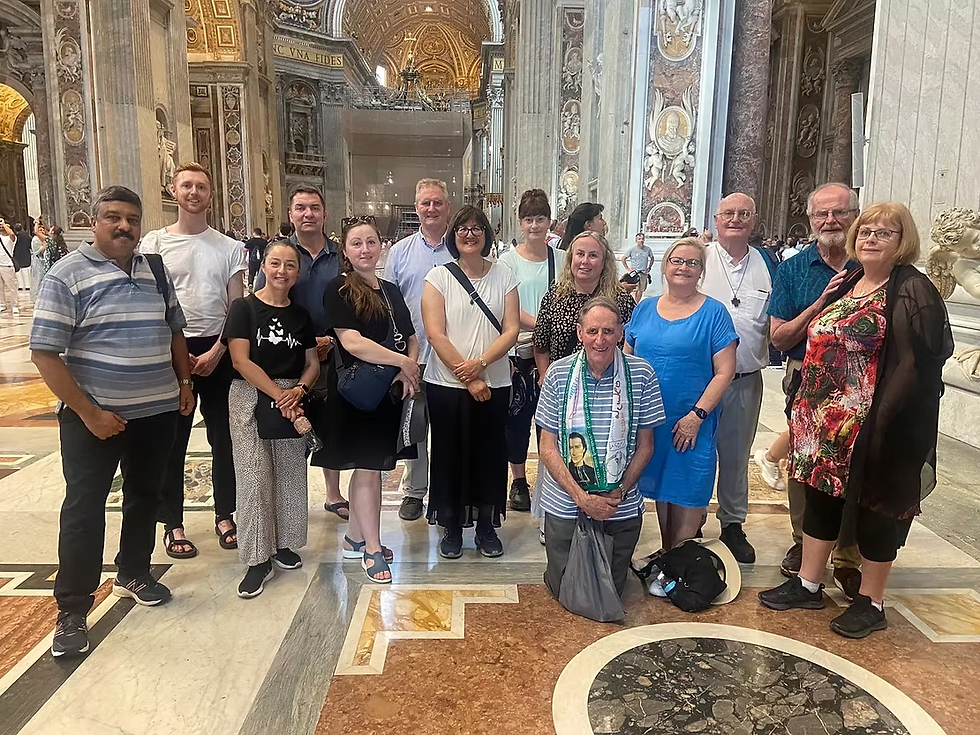
One experience that deepened my own appreciation of the Marist spirituality was making the pilgrimage to France a couple of years ago with other Marists. Seeing the Hermitage and learning how St Marcellin built it by hand was inspiring. But what impressed me even more was that he wasn’t simply building a house - he was building people.
The pilgrimage was a deeply humbling experience. Being in the places where St Marcellin Champagnat lived and worked, I felt a real sense of his spirit and presence. It opened my eyes and heart to the immense sacrifices he made to send Marist Brothers into the world, carrying forward his dream that every young person would be loved, cared for, and educated while coming to know God. He was a visionary far ahead of his time, and it is a privilege to be part of the Marist community.
That mission is still alive at St Paul’s today.
But what impressed me even more was that St Marcellin wasn’t simply building a house - he was building people.
I often remind our students that we stand on the shoulders of giants. When the school faced uncertainty in the 1950s, it was the Marist Brothers who chose to stay and keep St Paul’s alive. Had they not made that commitment, this school simply wouldn’t exist today.
Last year, as we celebrated 70 years of St Paul’s College, we welcomed generations of Old Boys back for Mass and celebrations. It was a wonderful reminder that the Marist spirit continues to connect people across generations.
In a world increasingly focused on outcomes, rankings and social media metrics, what does a truly “successful student” look like to you?
For me, a successful student is someone who is academically capable, but also compassionate, confident, strong in faith and committed to serving others.
One of the themes we spoke about at our recent chapel assembly was “Faith in Action.” At St Paul’s, every student is expected to complete 20 hours of community service each year. That might involve helping elderly neighbours, mowing someone’s lawn, raising money for charity, planting trees, volunteering at a local community club, or serving within their parish.
Those experiences matter because they help form young men with good hearts.

Academic achievement is important - we place a strong emphasis on learning and high standards - but our goal is to develop well-rounded young men who leave St Paul’s carrying Marist values with them.
We also want them to graduate believing that nothing is beyond their reach.
I often tell the boys that the world is open to them. They should never believe that success is reserved for someone else. If another person can achieve something, they can too.
I also encourage to follow BTB - strive to be better than before. Every day is an opportunity to improve, even if it is only by a small step. I also remind them that failure is simply a stepping stone to success. One setback does not define who you are. Learn from it, keep moving forward, and try again.
Academic achievement is important - we place a strong emphasis on learning and high standards - but our goal is to develop well-rounded young men who leave St Paul’s carrying Marist values with them.
Reading is another habit we constantly encourage. I tell the boys that if they spend just one hour reading each day, they will be ahead of most people because they are continually learning and growing.
Of course, families are an important part of that journey. We work closely with parents because we know many of our students carry significant responsibilities outside school.
Understanding those realities allows us to support each student while continuing to encourage them to strive for their full potential.
What is something you believe schools should be teaching, but currently aren’t doing well enough?
Values education. People choose schools like St Paul’s because they want more than academic success. They want their children to develop character.
For me, values education is about giving young people a foundation they can rely on. It means teaching faith, hope, love, commitment, compassion and joy - values that help guide the decisions they make throughout their lives.

Family life has changed significantly over the years. Many young people no longer experience the same sense of stability that previous generations enjoyed. Schools therefore have an even greater responsibility to provide consistency, belonging and strong relationships.
In a large school it’s easy for a student to become just another number. Here, our teachers know our students by name.
That’s one of the strengths of schools like St Paul’s.
In a large school it’s easy for a student to become just another number. Here, our teachers know our students by name. They build genuine relationships with them, and it’s those relationships that help young people flourish and reach their full potential.
Every school should strive to do that.
In today’s diverse and digital world, how does St Paul’s College ensure its faith-based education remains relevant and meaningful for young people?
Young people are surrounded by distractions, particularly through social media and smartphones. Many children are introduced to screens from a very young age, often without clear boundaries, and that inevitably shapes the way they see themselves and the world.
One of the most important things we can teach is how to make good choices - not simply choices that are convenient or popular, but choices that help them grow emotionally, spiritually and as people.

When I arrived at St Paul’s in 2021, we introduced a simple rule - no phones during the school day including interval or lunchtime.
Instead, we wanted students talking to one another, building friendships and engaging with the people around them.
If a student is found using a phone during school hours, it’s confiscated and a parent must come to school to collect it. That creates accountability for both students and families.
The difference has been remarkable. If you walk around the school during lunchtime now, you will see students talking, laughing, playing sport and spending time together - not sitting silently looking at screens. This has now been made mandatory for all New Zealand schools since last year.
At St Paul’s, we believe faith-based education is about much more than teaching religious knowledge. It is about forming young people with the wisdom, values and resilience.
Social media isn’t going away, but we have to help young people use it wisely.
Platforms built around likes, followers and instant validation can have a profound impact on self-esteem. It’s easy for a young person to think, “Nobody liked my post, so maybe nobody likes me.” That can quickly affect their confidence and mental wellbeing.
Every year, students also participate in sessions about social media, digital footprints, online responsibility and healthy technology use. We also involve parents because many don’t fully realise the long-term impact that unrestricted access to smartphones can have.
At St Paul’s, we believe faith-based education is about much more than teaching religious knowledge. It is about forming young people with the wisdom, values and resilience to navigate an increasingly complex world while remaining grounded in their identity, their purpose and what truly matters. That is the heart of what we hope to achieve.
What has been the most difficult leadership decision you have had to make since becoming principal of St Paul’s?
One of the biggest changes was introducing regular exams!
When I arrived at St Paul’s, formal school examinations weren’t a consistent part of the assessment program, particularly for the junior year levels. I believed our students needed more opportunities to experience exams in a supportive environment, so we introduced examinations at the end of each term.
For me, exams shouldn’t create fear - they should build confidence.
The more students experience examinations, the more they see them as simply another opportunity to demonstrate what they have learned. By the time they reach their NCEA or Cambridge external assessments, they already know what to expect.

There was some hesitation at first, but our leadership team believed it was the right direction. Over time, staff saw the benefits, and today examinations are an established part of our learning program.
Another significant challenge has been growing the school.
We have reached our current roll capacity of 400 students, and we are working closely with the Ministry of Education, and the proprietors to increase that to 500. Expanding our facilities would allow us to offer more subjects and create opportunities for even more young people to benefit from a Marist education.
Looking ahead, what do you think the next 50 years of education will demand of schools like St Paul’s?
I believe there will be an even greater desire from families to choose values-based education.
One of the conversations I would like to see continue is around access to Catholic schools.
At present, the vast majority of our enrolments are reserved for students with a Catholic preference, with only five per cent of seats available to students from other faith backgrounds.
I understand the reasons for those regulations, but I also think there are many families who value what Catholic schools offer, regardless of their own religious background.
We need teachers who both live their faith authentically and have the professional expertise to inspire young people in the classroom.
Growing up in India, I saw children from many different faiths attend Catholic schools. They left with strong values, a sense of service and an understanding of compassion, regardless of their religion.
Those values benefit society as a whole.
If more young people could experience a Catholic education, I believe they would benefit from an education that places strong emphasis on integrity, compassion and service, helping them become people who contribute positively to society in whatever path they choose.

At the same time, we also need outstanding Catholic educators.
It’s not enough simply to identify as Catholic. We need teachers who both live their faith authentically and have the professional expertise to inspire young people in the classroom.
That combination will be essential if Catholic education is to flourish in the decades ahead.
How has leading St Paul’s changed you personally?
Perhaps the greatest gift has been the freedom to live my faith openly.
In my previous role in a state school, I could demonstrate values such as kindness, respect and compassion, but I couldn’t openly speak about my faith because of the secular nature of the education system.
Perhaps the greatest gift has been the freedom to live my faith openly.
At St Paul’s, I have the privilege of integrating faith into everyday life.
Every morning I can share reflections from the Gospel or something that has inspired me through prayer or daily Mass.
That has brought me enormous joy.

Of course, leading a Catholic school also comes with responsibilities and governance requirements that I hadn’t fully appreciated beforehand.
But those responsibilities are part of the mission, and I have been happy to embrace them.
Finally, if you had to describe the 150-year legacy of Marist education in Aotearoa New Zealand in just one word or sentence, what would it be?
Courage.
The Marist Brothers showed extraordinary courage in establishing schools, serving communities and remaining faithful to their mission through changing times.
That same courage is still needed today - to continue living the Marist spirituality, to keep placing young people first and to carry that legacy confidently into the future.
If we can do that, I believe the Marist mission will continue to flourish for generations to come.


Comments