
Building a Culture of Care: Marist Schools Champion Safety with Year-Round Safeguarding Workshops Across the Province
- maristbrothers
- Apr 14
- 9 min read
Since January last year, the Star of the Sea Province has been rolling out a series of safeguarding workshops for schools. The initiative emerged after Brothers and Marist school leaders, through their travels and teaching experience, identified gaps in safeguarding practices and recognised the urgent need for action.

In response, Br John Hazelman, then Provincial Delegate for Pasifika now General Councillor, and Br Peter Horide, Provincial Delegate for Aotearoa–New Zealand, set in motion a plan to develop workshops for teachers and school staff across the Province. They were soon joined by Br Peter Rodney, Chair of the Province Safeguarding Commission. At their core, these workshops reaffirm a central Marist conviction: the well-being of young people must always remain at the heart of education and formation. Teachers and leaders are not only equipped with practical tools and knowledge, but are also encouraged to embrace safeguarding as an expression of the Marist mission itself - creating spaces where every child feels safe, respected, and supported.
The first workshop was held in Fiji last January, with participants from Kiribati, Samoa, Vanuatu, Autonomous Region of Bougainville, Fiji, Solomon Islands, and beyond. Since then, the program has steadily expanded across the Province, bringing educators and leaders together to build Marist spaces for young people that are inclusive, welcoming, and safe.

A year on, the initiative continues to gain momentum, strengthening safeguarding practices and deepening awareness across the Province. The Star Post spoke with Br John Hazelman (then Provincial Delegate to the Pasifika) and Br Peter Rodney about the origins of this initiative, why safeguarding is such a vital priority, and how it is shaping a stronger culture of care.
Excerpts from interview with Br John Hazelman:
What prompted the need for this initiative and the series of workshops across the Province?
In general, although there were safeguarding workshops that were held in the past, and that policies were written and were found in Marist schools around Pasifika, they were merely that, memories of the past. Many of the Safeguarding documents were outdated and there was little knowledge among the present group of teachers of these practices. The exception would be Fiji, as its government has been upfront in implementing government policies that make it compulsory for all of its schools to have safeguarding policies.

During my visits to different countries in the Pacific, I noticed that even among the Brothers there were gaps in our capacity to respond if, for instance, an abuse case involving a Brother were to arise. Safeguarding had been part of formation in the past, but like anything, if there is little or no follow-up, knowledge and understanding of these practices can fade over time. This made it clear that we needed to strengthen awareness, refresh training, and ensure that Brothers and lay staff alike are equipped to handle such situations responsibly and with care.
Pasifika people learn and integrate safeguarding processes more effectively when we engage as tagata Pasifika (people of Pasifika) – face-to-face, in conversation and relationship. Written documents, while useful, can often feel lifeless or disconnected from our reality if they are simply handed over. It is when tagata Pasifika come together, sharing, deliberating, and engaging with one another, that true understanding, acceptance, and integration take place.
How long has this initiative been in development?
I was in Aotearoa New Zealand when the Royal Commission Redress started. I had first-hand experience of the seriousness of the issue of professional standards and how it affects our Brothers as well as our image and credibility. This landscape was all new for me. I realised that this experience that our Brothers in both Australia and ANZ encountered have not been part of the experience of most Pasifika Brothers and lay people in our schools. The seriousness towards professional standards issues and safeguarding practices was something 'foreign' to us in Pasifika.
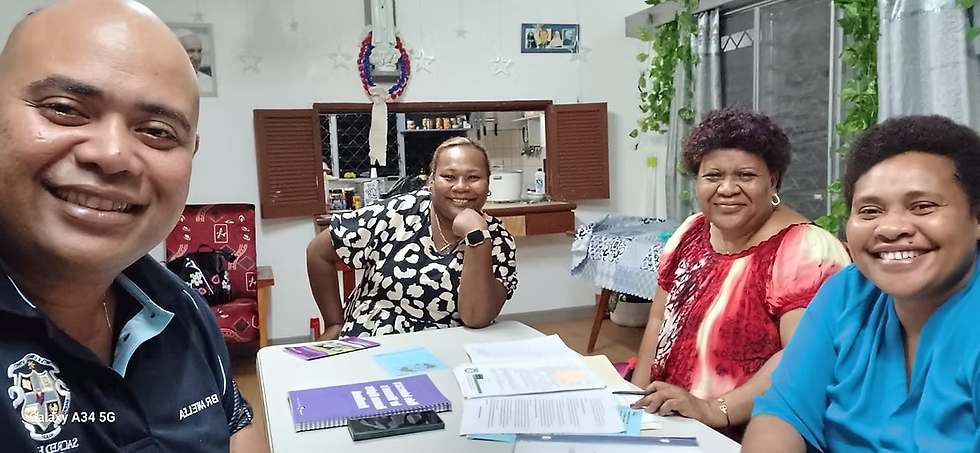
Br Peter Horide and I began thinking about holding a safeguarding workshop for our Pasifika Brothers and teachers as early as 2023, with the hope of organising it in 2024. Br Peter had already visited Samoa, Fiji, and Kiribati in the past, where he had conducted some safeguarding workshops before the disruptions caused by COVID. Our initial plan was to bring in Marist experts from Europe, but the scale of such a gathering meant that funding quickly became a challenge.
By that time, the Province Safeguarding Commission was already established, and collaboration with them - especially with the Chair, Br Peter Rodney - helped us move forward with planning the workshop that eventually took place earlier this year. While international expertise is always valuable, we came to see that the greater priority was to draw on Pasifika voices and experience. Contextualisation is crucial in safeguarding, and having Pasifika experts leading these conversations makes the work far more relevant and effective for our communities.

Excerpts from Br Peter Rodney:
Could you elaborate on the role of the Province Safeguarding Commission in overseeing and providing guidance to ministries on safeguarding matters?
In essence, the role of the Commission is to assist each ministry in the Province to have a current Safeguarding Policy which reflects best practice and is appropriate for its context. In addition, it ensures that each ministry has a designated Child Protection Officer (CPO) and team, who are trained, confident, and supported. The Commission can assist in training and support.
Before rolling out the series of workshops across the Pacific, you first held an initial session in Fiji, attended by principals and school leaders from across the Province. What activities took place during that week to help participants gain a better understanding of safeguarding?
Before focusing on the elements of an effective policy and practice of safeguarding, we wanted to ensure that the participants were well-grounded in the foundations of safeguarding, to be suitably motivated before moving to practicalities. The grounding was in the United Nations Convention on the Rights of the Child, first-hand knowledge of the human consequences when safeguarding fails, and a refresher on the core elements of Marist education.

What were the most important safeguarding issues raised during the conference last year?
Understandably, there was a shared desire to have a current policy and practice - that the policy be practical and appropriate for individual contexts. But given this, there was a shared concern among the participants that there be a commitment to safeguarding by both ministry leaders and governance bodies, as well as all the teachers in each ministry.
Were there any unexpected insights or challenges that emerged during the discussions?
For me, a significant insight was how easily and appropriately safeguarding sits within Marist quality education. All the elements that we are striving for in the development of Marist schools align with the core goal of safeguarding: the safety and well-being of each and every student. When the participants were asked: What would St Marcellin do? they understood the significance of the question immediately.

One challenge that is emerging is the training of all staff in receiving concerns and complaints. Children will approach a person whom they trust, and whom they see as being able to do something. A pastoral, caring, and professional teacher, even though not the designated Child Protection Officer, could well be the first person to whom the child discloses. There are also possible cultural factors; would a female student be comfortable disclosing to a male teacher, and vice versa. So, all staff need training in how to respond appropriately. There are simple guidelines for this, and generally they are included in the safeguarding policy.
How did participants respond to the training and discussions?
The training was warmly welcomed and appreciated. A significant contributor to the success of the workshop was that the sessions were led by Pasifikans. Br John Hazelman (Provincial Councillor and Provincial Delegate for Pasifika) and Chris Lus (member of the Province Safeguarding Commission and leader of the Pasifika Safeguarding Network) connected to the participants. As they said: “You are one of us.”

A consistent ‘message’ of the workshop was that ‘you are not alone’. Networking was frequently encouraged. The participants now have their own WhatsApp group for sharing their implementation and encouraging each other. It has been encouraging to see what has been posted since the conclusion of the workshop.
The participants were strongly encouraged to network with other Church groups and with NGOs active in supporting women and children. This is especially important in small island nations which do not have the in-country personnel that exists in other places.
Did you feel that certain cultural attitudes impacted safeguarding efforts, particularly regarding child protection in the region?
Even in a country like Australia, with a population in the millions, and its values on individual rights and independence, we know that even adults are reluctant to come forward when sexually assaulted. I do not underestimate the challenges to safeguarding and reporting that exist in cultures where because of the very small communities, there is no anonymity, and the reputation of the family is paramount. The family is not to be shamed by disclosure of abuse.

I am learning that in countries with strong child protection legislation, safeguarding is more embedded in the consciousness of people, and mandatory reporting is enforced and supported. Such legislation does exist in our region, but not everywhere. In Australia, it took a Royal Commission to develop a national consciousness of the importance of safeguarding and to change attitudes and practice here.
How do you ensure that the policies developed follow best practices while also being culturally appropriate?
This begins with the attitudes of the Province Safeguarding Commission. When the Star of the Sea Province commenced, there were foundational principles which included subsidiarity (decision-making and responsibility at the local level) and avoiding unnecessary centralisation of Province activities. Therefore, the Commission works to assist and support safeguarding policy development at the local level. The Commission assists by providing samples of policies and practices. The Commission encourages local policy development which engages the relevant local stakeholders – teachers, parents, students, Board members, ministries of education, Catholic Education offices, and so forth. The Commission will offer feedback on whatever emerges from these consultations. The policy and practices are then approved by the governance body of that particular ministry. Going forward, it will be that governance body which will be asked to provide an annual attestation of compliance.
How do you plan to maintain momentum and ensure ongoing support for safeguarding officers?
I do not underestimate the challenges of maintaining momentum after a workshop and ensuring ongoing support. Schools are busy and complex environments. Leadership must address numerous immediate issues and challenges. In some cases, this means focusing on the basics: having sufficient and professional staff, maintaining and repairing facilities that are in urgent need of attention, and managing enrolment pressures within the available capacity, among other priorities.

School leaders need understanding and support. This can be provided, in part, by those with roles in the Province, who visit from time to time during the year.
A network with regular online meetings has been established by Chris Lus for the local Child Protection Officers.
Beyond policy updates, what can be done to change attitudes or strengthen accountability within ministries?
Can I put it this way: a stick and a carrot. As I have said, where there is strong national child protection legislation, people are aware of their legal responsibilities and compliance. Networking with NGOs and other civil society groups committed to the protection of women and children leads to legislative development. In addition, the situation and needs of students in that ministry serve as a motivation to ensure safeguarding. This approach shifts safeguarding from being a remote, bureaucratic requirement to a practical commitment to the well-being of actual children in the school community.
A survivor attended that first conference in Fiji - what impact did their testimony have on the participants?
This conversation was challenging for everyone. For many participants, it was their first experience hearing a survivor’s story - particularly difficult when the abuse occurred in a context personally familiar to some. Understandably, participants experienced a wide range of emotions and reactions. One participant aptly described the experience as a ‘bitter truth.’
There are many lessons to be learned from the experiences of victim-survivors, not least of which is that the effects of child sexual abuse touch all aspects of their lives and are often lifelong. Hearing this reality discourages us from dismissing their trauma or minimising the impact of sexual abuse.
Following the 2025 conference, safeguarding workshops have been conducted across the Province over the past year. What are your expectations for the group this year?
The workshop concluded with ten agreed understandings and commitments. Each national group returned to their ministry with a plan for 2025. For all, this included a commitment to having an updated and appropriate child safeguarding policy approved and in place within the year. For the policy to be effective, it must result from thorough consultation - a process that takes time for individuals managing many other roles and responsibilities. The year 2026 is envisioned as a period of implementation and review.

At the conclusion of the workshop, I was greatly encouraged by my experience of the participants. They are generous and caring people who have accepted the safeguarding role in their ministry. They are Marist educators deeply committed to the well-being of each student.
The Safeguarding conference in Fiji in 2025 was financially supported by Australian Marist Solidarity (AMS).


Comments